
How InKorr Services Heat Exchangers for a Large Ship Operator
How InKorr Services Heat Exchangers for a Large Ship Operator
When a large ship calls for a heat exchanger service, precision, reliability, and a clean result are essential. These vessels operate around the clock, and any issue left unaddressed can quickly become a bigger problem. That is why the ship’s team trusts InKorr to carry out their plate heat exchanger maintenance, both onsite aboard the vessel and back at our factory.
Here is a look at how we approach the job.
How the Client Monitors Performance
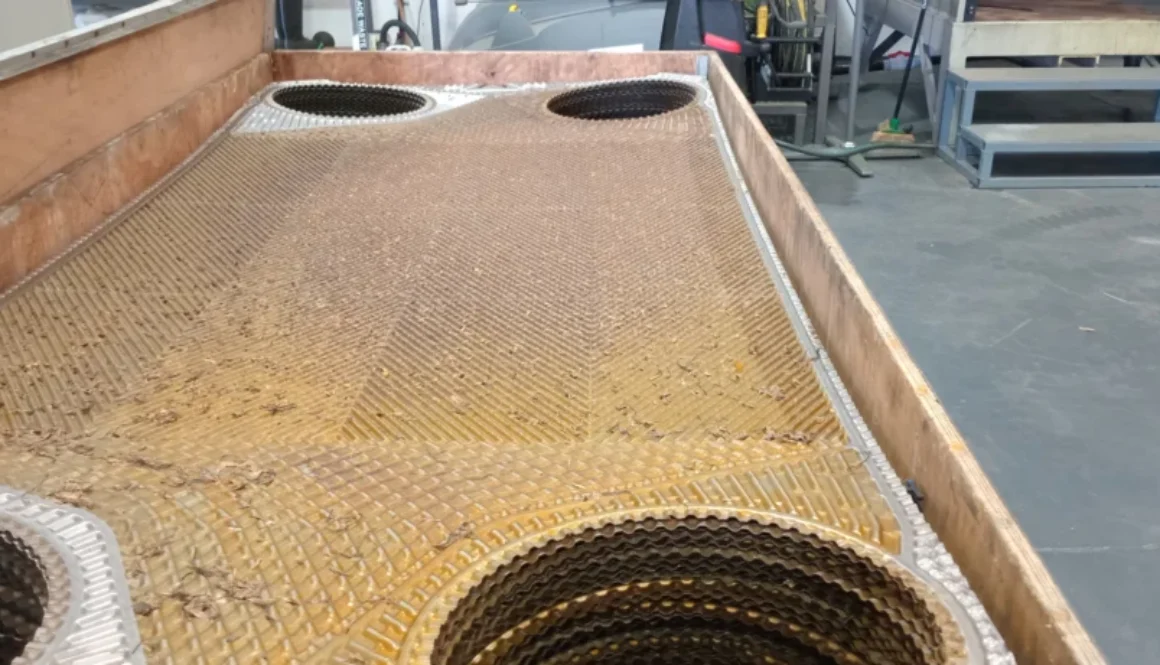
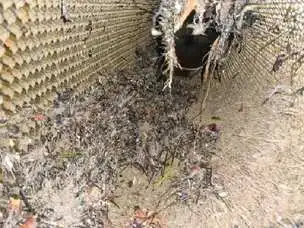
Before a service call even happens, the vessel’s team is already keeping a close eye on the health of their heat exchangers. The client monitors the pressure drop across each unit as a key performance indicator. Under normal operating conditions, this pressure drop sits within an expected range. But as fouling builds up inside the unit over time, that value starts to creep upward.
Fouling reduces the effective heat transfer area inside the exchanger and narrows the flow channels that the fluid passes through. The result is reduced thermal performance and increased resistance to flow. By tracking the pressure drop continuously, the client can identify when a unit is starting to degrade and schedule service works before any real performance problem develops. It is a proactive and data-driven approach to maintenance that keeps the vessel running at optimum levels without waiting for a failure to force the issue.
Once the pressure drop indicator tells them it is time, they contact InKorr to get the job done.
Onsite Service Aboard the Vessel
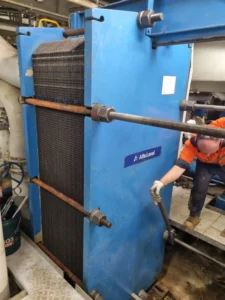
Our team arrives onsite with the unit already shut down and prepared for service by the vessel’s crew, which helps keep downtime to a minimum. The first step is checking the crush dimensions and confirming the number of plates in the pack. This baseline data is important for verifying that the unit is assembled correctly and that nothing has shifted or changed since the last service.
With measurements confirmed, we open the unit and carry out a thorough inspection. This is an important step that goes beyond simply cleaning and reassembling. We are looking at the condition of the plates, the gaskets, and the overall state of the pack to understand how the unit has been operating and whether anything needs closer attention before it is put back into service.
The plates are then carefully removed from the unit and stacked near the access hatch. This is done in a way that makes it straightforward for the onboard team to pack them securely into crates for transport back to our factory. Taking care at this stage protects the plates from damage during transit and ensures they arrive in a condition that accurately reflects their true state, rather than one caused by rough handling.
While the removed plates are being prepared for transport, we install the rotatable plate pack into the unit and reassemble everything ready for operation. This approach means the vessel does not have to wait for the plates to be cleaned before the heat exchanger can be brought back online, which is a significant advantage in a working vessel environment where downtime has real operational and commercial consequences.
Back at the InKorr Factory
Once the plates arrive back at our factory in their specially made crates, the in-house process begins. We start with a full inspection of each plate before any cleaning takes place. This allows us to document the condition of the plates as they came out of the unit, identify any that may have sustained damage or significant wear, and flag anything that needs attention beyond a standard clean.
The plates then go through a high pressure hot wash at 200 bar using water heated to 60 degrees Celsius. This combination of pressure and temperature is highly effective at breaking down fouling deposits, biofilm, and scale that have built up on the plate surfaces over time. The process restores the plates to a clean condition without causing surface damage, ensuring they are ready to perform at full capacity when reinstalled.
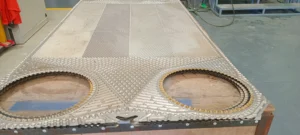
After cleaning, every plate is inspected again. This second inspection is just as important as the first. With the fouling removed, we can properly assess the condition of the plate surfaces and identify any issues that were hidden underneath the build-up. We also carefully examine the gaskets to confirm they are in good condition and suitable for reinstallation. Gasket integrity is critical to the performance and safety of the heat exchanger, and we will not pass a plate back through unless we are confident everything is as it should be.
Once the plates have passed inspection and all gaskets have been checked, we restack the plates in the correct order and configuration. The cleaned and inspected pack is then prepared for shipment back to the vessel, ready to be installed during the next scheduled service. This rotation system keeps everything moving efficiently and minimises the time the vessel is without a fully operational heat exchanger.
A Reliable System That Works
What makes this service arrangement work so well is the combination of a client who monitors their equipment intelligently and a service provider who shows up prepared and executes the job thoroughly. The vessel’s team does not wait for a problem to become serious before giving us a call. They have built pressure drop monitoring into their operational routine, and they use that data to make informed decisions about when to call us in.
From our end, InKorr has developed a streamlined process that respects the realities of working on a vessel in active operation. The rotatable plate pack system, the purpose-built crates for plate transport, and the structured factory cleaning and inspection process all contribute to a service that is fast, thorough, and repeatable.
InKorr maintained our exceptional service record, and developed short-, medium-, and long-term maintenance plans with our client to minimise downtime and to optimise their spare parts procurement.
The end result is a heat exchanger that goes back into service performing the way it should, with documented service history and a clear picture of its condition for the next interval.
Interested in a Similar Service for Your Equipment?
Whether you operate marine vessels, industrial plant, or processing facilities, InKorr provides professional plate heat exchanger servicing that is built around keeping your equipment performing and your operations running. Get in touch with our team to discuss a service arrangement that works for your site and your schedule.