
Electrical Heaters
Immersion Heaters
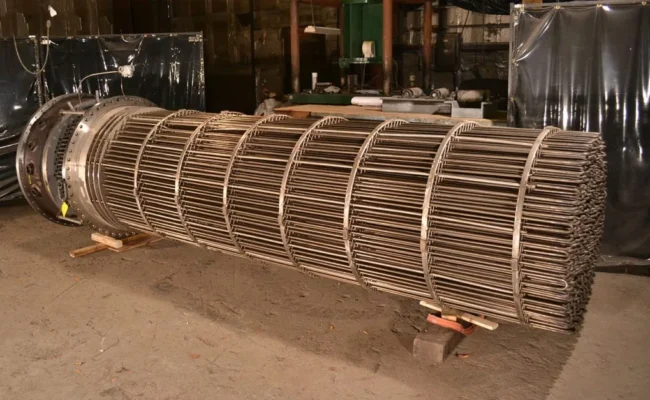
Immersion heaters use a removable bundle of electric heating elements, arranged in a u-tube configuration and mounted to a flanged support plate, to heat process fluid directly as it flows through the heater shell.
Key features:
- Low-temperature wiring in the terminal box, thanks to generous standoff from the tubesheet
- Thermocouples welded to element sheaths for accurate temperature monitoring
- Moisture-sealed elements to prevent premature failure
- TIG-welded tubesheet joints to prevent process leakage
- Large terminal box for easy access during installation and maintenance
- Optional duplex thermocouples for redundancy
Typical range: 10 kW–1 MW per bundle (up to four bundles per shell), supply voltages up to 600 VAC, sizes from NPS 2.5 to NPS 42. Suitable for air, ammonia, hydrocarbons, hydrogen, natural gas, nitrogen, steam, and many other process gases and fluids.
Radiant Heaters & Furnaces
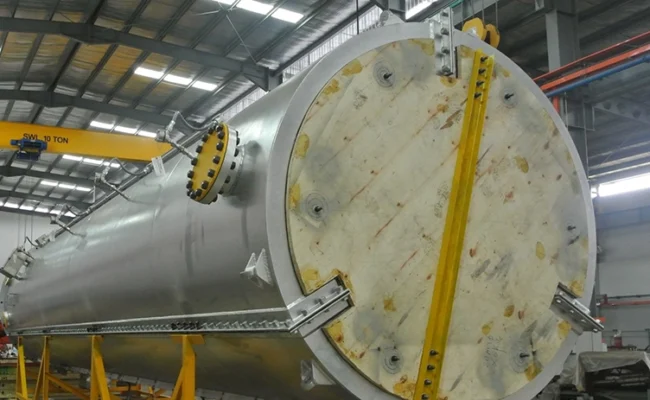
Radiant furnaces heat a pressure vessel, reactor, or coil indirectly — the heating elements never contact the process fluid, making this option ideal for high-temperature, corrosive, or two-phase services.
Key features:
- Supplied in three 120° segments assembled around the vessel
- Internally insulated casing (200–300 mm modular ceramic fibre)
- Accommodates large-diameter vessels up to temperatures of 1090°C (2000°F)
- Accessible, replaceable heating elements
- No moving parts, low maintenance, long service life (typically 20–30 years)
Typical range: up to 1200°C (2192°F), power duties up to 16 MW, vessels up to 4.2 m diameter. Common in catalyst regeneration, molten salt storage, and pyrolysis applications.
Impedance Heaters
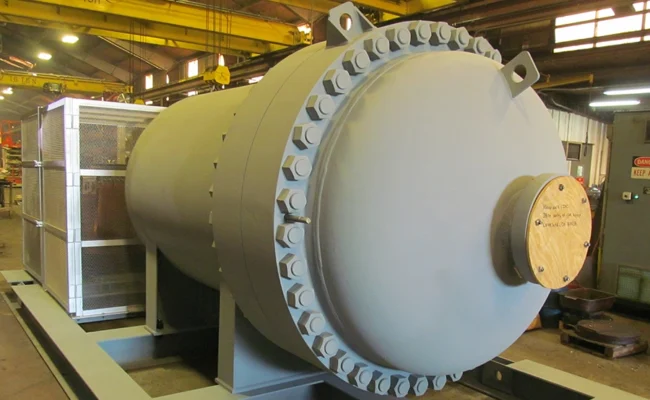
Impedance heaters energise the pressure vessel wall itself, eliminating fragile immersed elements entirely. This allows higher operating temperatures and pressures than immersion heaters, and makes them well suited to fouling or two-phase fluids.
Typical range: 10 kW–1 MW+, temperatures up to 1010°C (1850°F), pressures up to 325 bar(g) (4700 psig). Used for supercritical fluids (water, ammonia, CO₂), high-temperature gases, and tubular reactor heating.
Control Panels
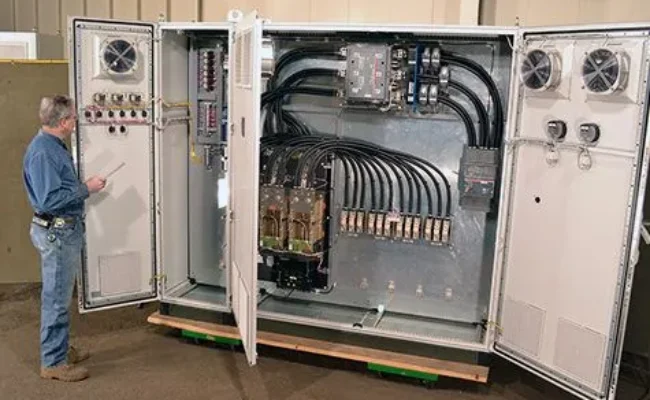
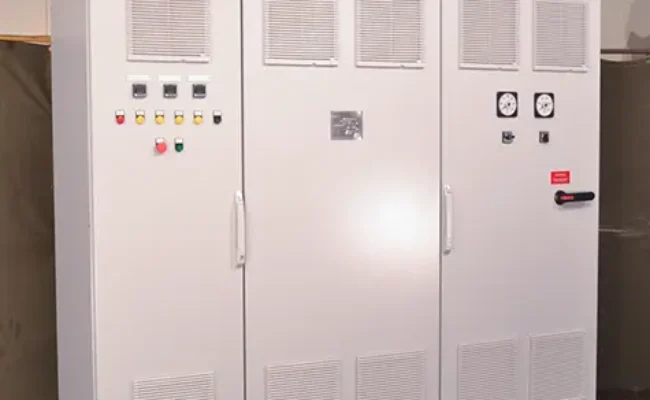
Every electric heater is paired with a control panel custom-designed to suit the application, from simple relay-controlled panels to full PLC systems, built to CSA, ATEX, or UL 508A standards as required, for both hazardous and non-hazardous areas.
Want to Know More?
Get in touch with our team to discuss sizing and specifying an electric heater for your process.