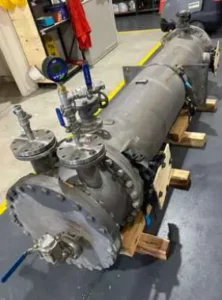

The Hidden Cost of a Fouled Heat Exchanger
A fouled heat exchanger rarely announces itself loudly. Instead, it erodes your plant’s performance quietly. Energy bills climb, production targets slip, and a maintenance shutdown that could have been planned becomes one that cannot be avoided.
Fouling is the single largest cause of reduced heat exchanger performance in industrial plants, yet it remains one of the most underestimated operational costs. Because the decline happens gradually, plants often continue operating with significant efficiency losses long before the problem becomes visible.
Over time, these hidden inefficiencies compound. What begins as a thin layer of deposits can escalate into reduced thermal efficiency, higher pumping energy, corrosion damage, and ultimately premature equipment failure.
Understanding fouling, recognising the warning signs, and addressing the root causes early can save plants significant operational and maintenance costs.
What Is Fouling?
Fouling refers to the accumulation of unwanted material on heat transfer surfaces inside a heat exchanger. These deposits form a barrier between the process fluid and the heating or cooling medium, acting like insulation and slowing the transfer of heat.
Even very thin layers of fouling can significantly reduce performance because heat exchangers rely on clean metal surfaces to transfer heat efficiently.
Several different fouling mechanisms occur in industrial processes.
Scaling and crystallisation occur when dissolved minerals such as calcium carbonate precipitate out of solution, typically in hard water systems. These mineral deposits form hard layers that are difficult to remove and significantly reduce heat transfer.
Biological fouling, also known as biofouling, occurs when microorganisms such as bacteria, algae, or biofilms grow inside cooling water systems. These biological layers trap particles and create thick insulating deposits.
Particulate fouling results from suspended solids present in raw water, slurries, or industrial process streams. These particles settle and accumulate on heat transfer surfaces when fluid velocities are insufficient to keep them suspended.
Corrosion fouling develops when corrosion products form and accumulate on the surface of tubes or plates. These deposits not only reduce heat transfer but also indicate underlying material degradation.
Chemical reaction fouling occurs when chemical reactions at the heat transfer surface create deposits. A common example is product burn-on in food, dairy, or chemical processing when surface temperatures become excessively high.
In many industrial systems, fouling rarely occurs through a single mechanism. Instead, multiple types combine to form complex deposits that are harder to remove and more damaging to performance.
The Real Costs
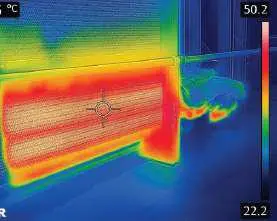
- Energy losses:When fouling builds on heat transfer surfaces, it increases the thermal resistance within the exchanger. As a result, more energy is required to achieve the same outlet temperature.
A fouling resistance of just 0.0001 m²K/W can reduce the overall heat transfer coefficient (U-value) by 10 to 30 percent. This means boilers, chillers, or cooling towers must work significantly harder to maintain process conditions.
Over months or years, this increased energy consumption can represent a substantial operational cost. - Increased pressure drop:
Deposits inside the exchanger narrow the effective flow channels available for fluid movement. This restriction increases the pressure drop across the equipment.
Higher pressure drop forces pumps to work harder to maintain the same flow rate. In some cases, flow rates decline instead, further reducing heat transfer performance and compounding the problem. - Unplanned downtime:
If fouling is allowed to progress unchecked, heat exchanger performance will eventually fall below acceptable operating limits. At that point, plants are forced to perform emergency cleaning or maintenance.
Unplanned shutdowns are far more expensive than scheduled maintenance because they interrupt production, disrupt downstream processes, and may lead to product losses.
- Accelerated corrosion:
Deposits often trap moisture, oxygen, and corrosive chemicals against metal surfaces. This creates localised environments that promote under-deposit corrosion.
This type of corrosion can lead to pitting, stress cracking, and eventually perforation of tubes or plates. Once structural damage occurs, the issue shifts from a performance problem to an equipment integrity risk. - Shortened equipment life:
Fouling also contributes to mechanical stress within the exchanger. Higher differential pressures, temperature gradients, and corrosion damage can significantly reduce the lifespan of tube bundles or plate packs.
In severe cases, equipment that should operate reliably for decades may require replacement after only half of its expected service life.
Warning Signs to Watch For
- Rising outlet temperatures on the cooling side (or falling on the heating side) at constant flow conditions
- Increasing pressure drop across the unit at the same flow rate
- Steam or utility consumption creeping upward without a change in production output
- Longer time to reach set-point temperatures on startup
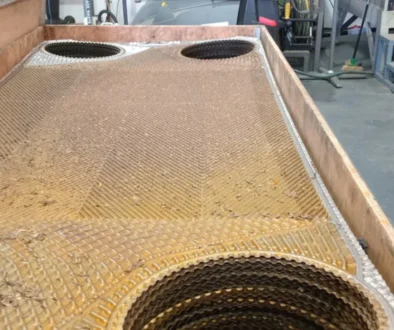
- Visible deposits or discolouration during gasket changeouts or inspections
Clean or Replace?
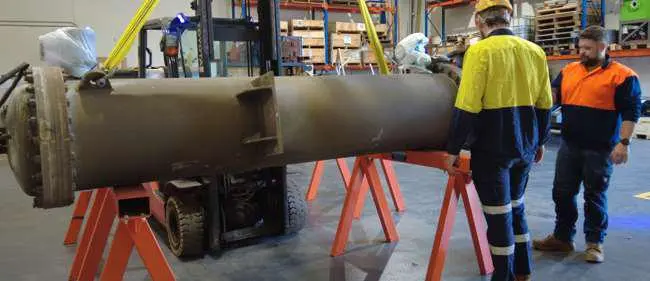
When fouling reduces performance, plant operators must decide whether cleaning the exchanger is sufficient or whether replacement is the more economical option.
When Cleaning Makes Sense
Cleaning is typically the right choice when the exchanger remains structurally sound and fouling is the primary cause of reduced performance.
Common cleaning methods include:
-
CIP (Clean-in-Place) chemical cleaning
-
High-pressure hydroblasting
-
Chemical descaling
-
Mechanical tube brushing or pigging
However, cleaning alone does not solve the underlying cause. If the process conditions that created fouling remain unchanged, deposits will quickly return.
Addressing factors such as water treatment, fluid velocity, and material selection is essential to prevent repeated fouling cycles.
When Replacement Is the Better Option
Replacement becomes more attractive when structural damage or operational inefficiencies make continued cleaning impractical.
Situations where replacement should be considered include:
-
Severe corrosion compromising structural integrity
-
Cleaning cycles becoming increasingly frequent
-
Maintenance costs exceeding the capital cost of replacement within a three to five year timeframe
-
The existing exchanger no longer meeting updated process requirements
When replacement is required, it is often worthwhile to review alternative heat exchanger technologies.
For example, spiral heat exchangers can significantly reduce fouling risk. Their single-channel spiral geometry promotes high turbulence and self-cleaning flow characteristics that help prevent deposit accumulation.
Prevention
While fouling cannot always be eliminated entirely, good design and operational practices can dramatically reduce its impact.
- Design for adequate fluid velocity – low velocity is the primary driver of particulate and biological fouling
- Specify corrosion–resistant alloys (duplex stainless, titanium, Hastelloy) to reduce corrosion fouling
- Invest in upstream water treatment for cooling circuits
- Monitor pressure drop and thermal performance regularly to catch fouling before it becomes severe
Preventative maintenance and monitoring typically cost far less than the operational losses associated with severe fouling.
Is Fouling Costing Your Plant More Than You Think?
Inkorr offers thermal audit services and independent heat exchanger assessments to help you quantify the impact of fouling on your process. Whether you need cleaning guidance, replacement equipment, or a broader review of your heat transfer strategy, our engineering team can help across Australia and New Zealand.
Contact us here for more information.