
Choosing the Right Milk Cooler for Your Australian Dairy Farm: A Local Manufacturing Advantage
The Critical Role of Milk Cooling in Modern Dairy Operations
For Australian dairy farmers, the journey from cow to consumer begins at the milking station, where rapid and efficient cooling is essential for maintaining milk quality, meeting regulatory standards, and maximising profitability. Within two hours of milking, raw milk must be cooled to 5°C or below to inhibit bacterial growth and preserve milk quality, making your choice of milk cooling equipment one of the most critical decisions for your operation.
Failure to meet temperature requirements is not simply a quality issue. It can result in milk rejection, financial loss, and increased regulatory scrutiny. Cooling performance directly affects bacterial counts, shelf life, and farm income. Consistent, reliable cooling protects your processor relationship and ensures you remain compliant with Australian Dairy Food Safety standards.
Why Milk Cooling Technology Matters
- Immediate cooling reduces bacterial growth and extends milk shelf life.
- Energy efficiency lowers operational costs through optimised heat transfer.
- Compact design saves valuable space in milking parlours.
- Reduced cleaning time with efficient CIP (clean-in-place) capabilities.
- Lower water consumption compared to older cooling technologies.
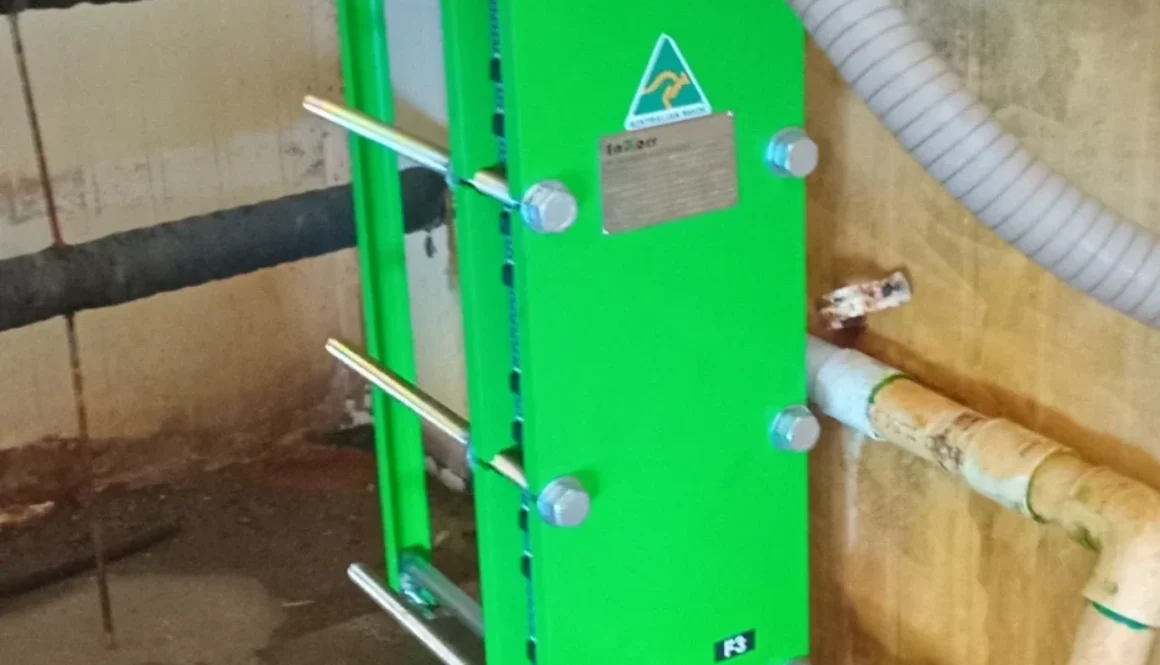
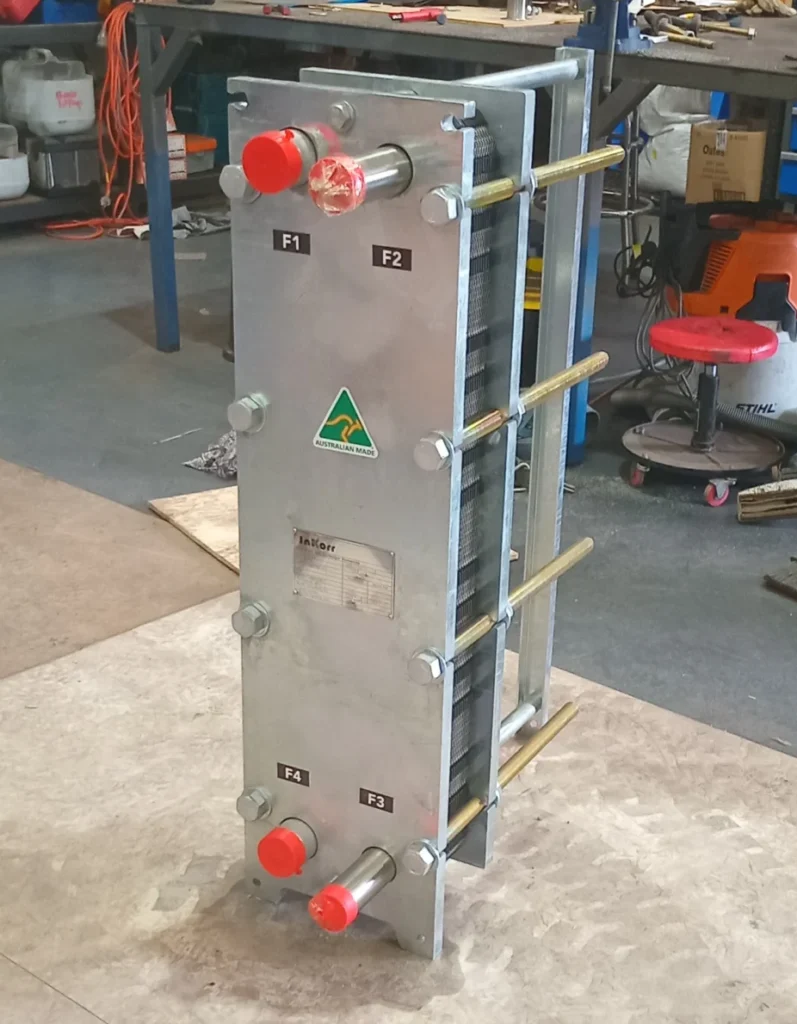
Plate heat exchangers achieve these benefits through highly efficient heat transfer design. Thin, corrugated stainless steel plates create a large surface area in a compact frame, allowing milk to flow in a thin film across cooled surfaces. The corrugation generates turbulence, improving thermal exchange and rapidly removing heat in a single pass.
Understanding Your Milk Cooler Options: Single vs. Dual Bank Systems
Selecting between single and dual bank systems is not just about capacity. It is about matching your cooling configuration to herd size, water availability, energy costs, and long-term operating strategy.
Single Bank Milk Coolers
Single bank plate heat exchangers use one cooling stage, typically chilled water or glycol, to bring milk down from milking temperature, approximately 35 to 37°C, to the required storage temperature of 4 to 5°C. These systems are ideal for smaller to medium-sized dairy operations where simplicity and lower capital investment are priorities.
Because the refrigeration system performs the full cooling load, single bank systems are straightforward to install and maintain. They offer reliable performance and are well suited to farms with moderate milk volumes and dependable chilled water supply.
Best suited for:
- Herds of 50-200 cows
- Operations with a reliable chilled water supply
- Farms looking for a straightforward, cost-effective solution

 Dual Bank Milk Coolers
 Dual Bank Milk Coolers
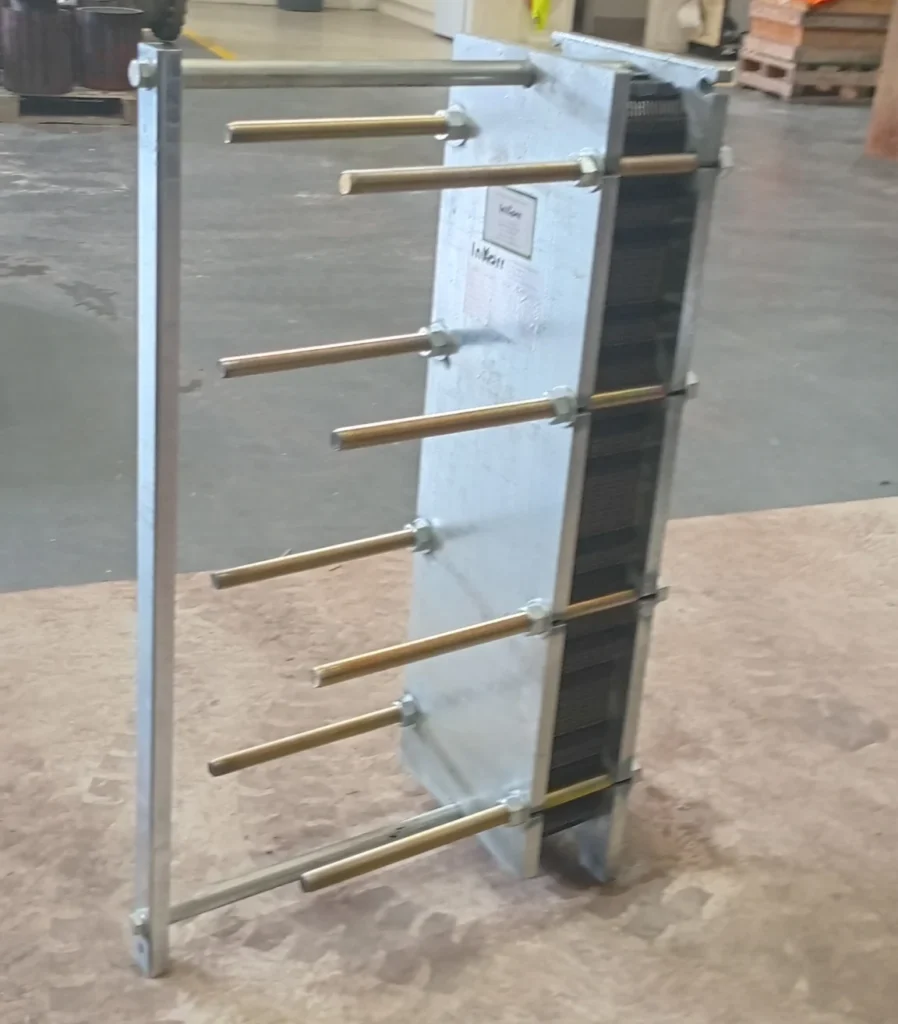
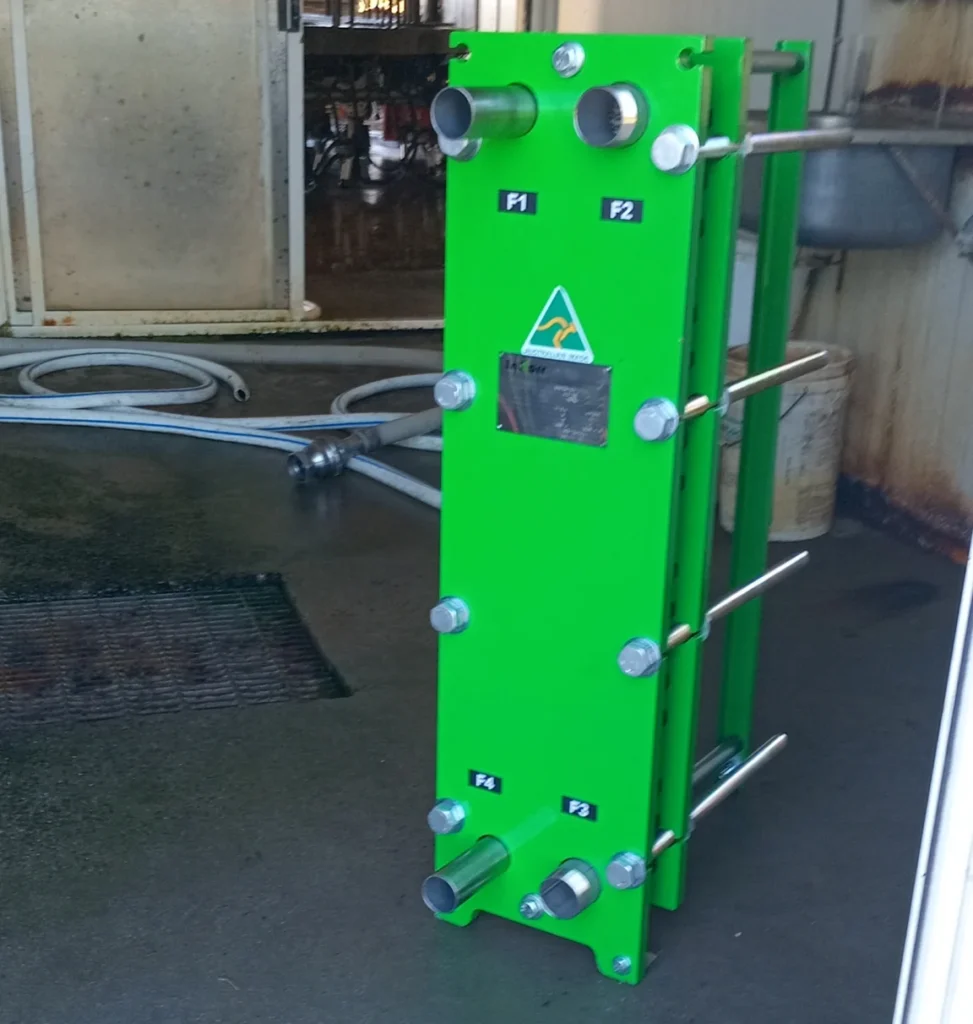
Dual bank systems employ two-stage cooling. The first stage uses mains water for pre-cooling, reducing milk temperature to approximately 15 to 18°C. The second stage then uses chilled water or glycol for final cooling to 4 to 5°C.
This staged approach significantly reduces the refrigeration load. By removing a large proportion of heat using mains water before refrigeration engages, dual bank systems can reduce compressor energy consumption by 30 to 50 percent depending on regional water temperatures.
In addition to energy savings, pre-cooling water can often be reused for stock drinking water, yard washdown, or irrigation. This improves overall water efficiency and adds further operational value.
Best suited for:
- Larger operations (200+ cows).
- Farms focused on maximising energy efficiency.
- Operations in regions with good quality, cool mains water.
- Dairies that are looking to significantly reduce refrigeration running costs.
Frame Material Selection: 304 Stainless Steel, Carbon Steel, or Galvanised?
304 Stainless Steel
Carbon Steel
Galvanised Steel
Provides good corrosion protection at a competitive price point. The galvanised coating offers improved resistance compared to untreated carbon steel and presents a practical middle ground between carbon steel and stainless steel for budget-conscious operations. Suitability depends on environmental exposure and maintenance practices.
When selecting frame materials, farmers should consider not only upfront cost, but environmental conditions, maintenance capacity, and expected system lifespan.
The InKorr Difference: Australian-Made for Australian Conditions
While global brands offer proven technology, Australian dairy farmers are increasingly recognising the compelling advantages of locally manufactured solutions from InKorr, based in Melbourne.
Australian dairy conditions vary significantly across regions, from coastal humidity to inland heat and water quality differences. Locally engineered systems are designed with these realities in mind.
Local Manufacturing Advantage
Faster delivery times – Weeks, not months. When international supply chains are disrupted or slow, InKorr’s Melbourne manufacturing facility means your operation isn’t held hostage to container shipping schedules.
Customisation flexibility – Do you need a specific configuration for your unique setup? Local manufacturing means our engineers can adapt designs to suit your farm’s layout, your region’s water quality conditions, and your specific herd size.
Direct technical support – Speak directly with the engineers who designed and built your system. No navigating international call centres or waiting days for responses across time zones.
Competitive pricing – Without international freight, import duties, and multiple distribution mark-ups, InKorr delivers premium Australian-made quality at genuinely competitive prices.
Local Service Providers – With a Local Service Provider available to assist with any issues you may have, worrying about downtime is a thing of the past.
Proven Performance: The Westfalia Partnership
InKorr’s reputation for quality and reliability has earned the trust of industry leaders, including Westfalia Warragul. Their endorsement speaks directly to InKorr’s ability to meet the exacting standards of global dairy equipment leaders.
After speaking with Mark at Westfalia, we found our units were very easy to install and hot swap with existing equipment, and they met the standards of Westfalia and their customers.
This partnership is a testament to InKorr’s capability to manufacture to international standards while maintaining the agility and responsiveness that only a local manufacturer can offer.
Making the Right Choice for Your Dairy Operation
When selecting a milk cooler for your Australian dairy farm, consider these key factors:
- Herd Size and Milk Volume – Determines the cooling capacity you require.
- Water Quality and Availability – Influences single vs. dual bank selection.
- Energy Costs – Dual bank systems deliver meaningful long-term energy savings.
- Budget Constraints – Balance initial investment against total cost of ownership.
- Service and Support – Local manufacturing means faster, more affordable response times.
- Customisation Needs – Unique farm layouts may require adapted designs.
- Compliance Requirements – Ensure systems meet Australian Dairy Food Safety regulations.
A structured evaluation of these factors ensures your cooling solution aligns with both current operational needs and future growth plans.
Why Australian Dairy Farmers Are Choosing InKorr
In an industry where equipment reliability directly impacts farm profitability and milk quality, Australian dairy farmers are increasingly turning to InKorr for their milk cooling needs:
 Australian-made quality meeting international standards
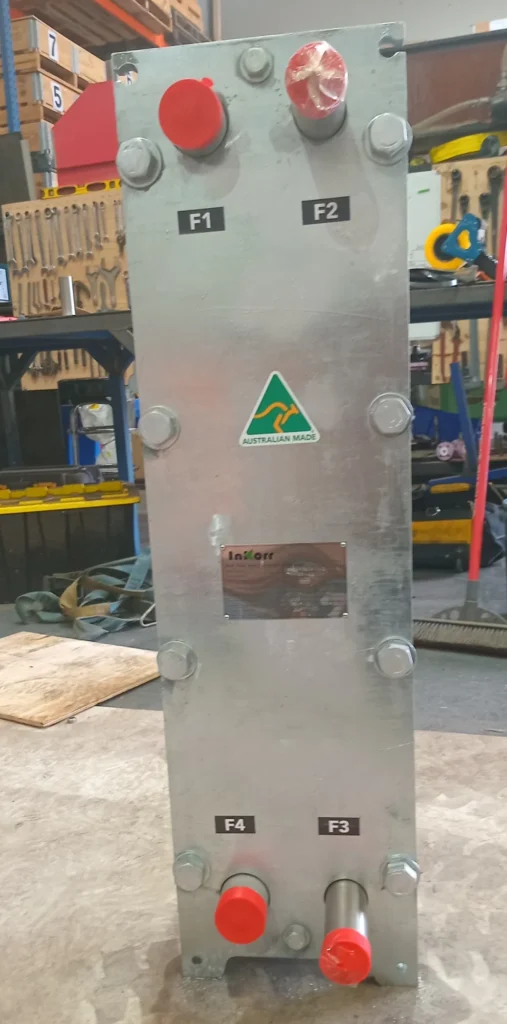
Flexible material options – 304 SS, carbon steel, and galvanised
Single and dual bank configurations for all herd sizes
Proven reliability trusted by industry leaders like Westfalia
Local engineering support when you need it most
Competitive pricing without compromising on quality
Fast delivery from our Melbourne manufacturing facility
For farms seeking dependable performance, regulatory confidence, and long-term value, InKorr provides a practical and future-focused solution.
Ready to Upgrade Your Milk Cooling System?
Whether you’re building a new milking parlour or replacing ageing cooling equipment, InKorr offers the expertise, quality, and local support Australian dairy farmers deserve.
Our team understands the unique demands of Australian dairy operations, from water quality variations across different regions to the specific requirements of various dairy processor standards. We’re not just selling equipment; we’re partnering with Australian farmers to deliver reliable, efficient milk cooling solutions that enhance profitability and protect milk quality.
InKorr – Australian-made heat transfer equipment for Australian conditions. From our Melbourne manufacturing facility, we design, manufacture, and maintain heat transfer equipment for dairy, food & beverage, chemical processing, and industrial applications across Australia and New Zealand.