
Why Asset Cataloguing Is the Future of Heat Exchanger Management
The Hidden Challenge of Managing Heat Exchangers
In industrial environments, heat exchangers rarely demand attention until something goes wrong. Whether you are operating plate heat exchangers (PHE), shell and tube systems, or specialised graphite units, these assets are critical to plant efficiency and thermal performance, yet they often operate quietly in the background, largely unnoticed until a failure forces them into focus.
The real challenge is not simply maintenance. It is visibility. Many industrial facilities operate with dozens of heat exchangers spread across large and complex sites, each unit carrying its own service history, material specifications, and operating conditions. Without a structured system to capture and centralise this information, tracking it becomes increasingly difficult over time. Service records get lost between technicians, maintenance decisions get made from memory rather than data, and the gap between what is known and what is actually happening inside the equipment steadily widens. The result is reactive maintenance, unexpected failures, and rising operational costs that are difficult to predict or control.
Introducing a Smarter Approach to Asset Management
To address this challenge, InKorr has developed a comprehensive Asset Cataloguing & Management Program designed to shift businesses from reactive repairs to proactive, data-driven asset control. Rather than relying on isolated service reports that exist in silos or disappear when staff change, this approach creates a centralised, living database of every heat exchanger on your site. The result is a single, reliable source of truth, one that your team can trust when making maintenance decisions, planning budgets, or responding to an emerging equipment issue.
This shift from reactive to proactive maintenance is not just an operational improvement. It is a strategic one. When you have complete, accurate, and up-to-date information about every asset on your site, you move from managing crises to preventing them entirely.
Building a Digital Blueprint of Your Equipment
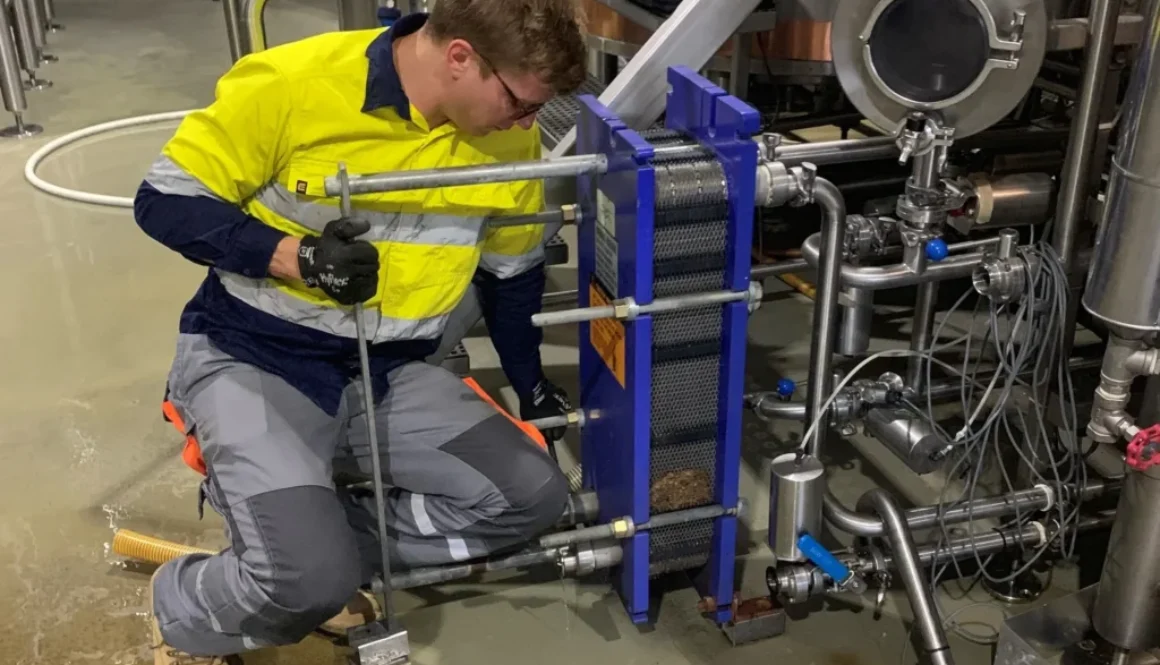
The foundation of the program is a comprehensive audit of all heat exchangers within your facility. Each unit is thoroughly documented and categorised into a structured digital schedule, forming a complete operational blueprint of your heat transfer assets. This is not a one-time snapshot, it is a living record that evolves with your equipment, capturing every service event, every measurement, and every observed change over the life of each unit.
What Gets Tracked?
Complete Service History – Every maintenance activity is recorded in full detail, including cleaning, descaling, pressure testing, and inspections. This ensures that nothing is lost between service intervals, between technicians, or between contractors. When your next maintenance window arrives, the full history of the unit is available at a glance.
Parts and Materials Ledger – Critical details such as gasket types, plate materials, and replacement dates are logged and maintained. This removes uncertainty during urgent repairs, ensures component compatibility every time, and eliminates the delays that come from having to identify the right parts from scratch when a unit needs immediate attention.
Damage and Wear Tracking – Technicians document wear patterns, corrosion, and structural anomalies during each service visit. Over time, this data allows for early identification of developing failure risks before they escalate into costly breakdowns, giving your team the opportunity to act on emerging issues during planned downtime rather than emergency shutdowns.
Operational Measurements – Critical specifications such as plate pack measurements are tracked against baseline values to ensure each unit consistently operates at peak performance. Deviations from expected measurements can signal early-stage problems that would otherwise go undetected until they become significant.
From Data to Strategy: Predictive Maintenance
The real value of asset cataloguing lies not just in having the data, but in what that data makes possible. Using the insights collected over time and InKorr’s decades of industry expertise, a predictive maintenance schedule is developed for your entire site. This schedule is not generic, it is tailored specifically to your processes, your equipment, your operating conditions, and your production calendar, whether you are in food manufacturing, chemical processing, pulp and paper, or heavy industry.
Planned Maintenance, Not Emergency Repairs – When you can see what is coming, you can plan for it. Predictive scheduling allows maintenance to be aligned with existing planned shutdowns rather than being triggered by unexpected failures that disrupt production at the worst possible time.
Accurate Budget Forecasting – One of the most significant operational benefits is the ability to forecast maintenance costs with confidence over a 12 to 24-month horizon. Instead of being surprised by unplanned repair costs, your finance and operations teams can plan with clarity and allocate resources where they are needed most.
Optimised Spare Parts Inventory – With a clear picture of which components are approaching end of life and when servicing is due, you can stock exactly what is required and nothing more. This reduces excess inventory, frees up working capital, and eliminates the scramble for parts when an urgent repair is needed.
Why Asset Cataloguing Matters More Than Ever
Industrial operations are growing more complex, and the cost of downtime continues to rise. A single unexpected heat exchanger failure can disrupt an entire production line, damage downstream equipment, delay deliveries, and impact profitability in ways that extend well beyond the immediate repair cost. In highly regulated industries, an unplanned failure can also create compliance and audit challenges that add further cost and complexity.
By implementing a structured asset management system, businesses can eliminate surprise failures through early detection, maintain complete and audit-ready documentation, extend the operational lifespan of high-value equipment, and improve overall plant reliability and efficiency. Across all of these dimensions, the investment in proper asset cataloguing pays for itself many times over.
Perhaps most importantly, it changes the relationship your team has with your equipment. Instead of waiting for heat exchangers to fail, your team is actively monitoring, predicting, and preventing failure. Maintenance becomes a strategic function rather than a reactive one, and that shift has real, measurable value.
Partnering for Long-Term Reliability
At InKorr, asset cataloguing is not simply about record-keeping for its own sake. It is about creating clarity, control, and confidence across your entire operation. By understanding every heat exchanger asset in detail, its history, its condition, its likely future behaviour, your team can make smarter decisions, reduce operational risk, and maintain consistent thermal performance across the full breadth of your heat transfer systems.
Our team brings deep technical expertise in heat exchanger design, maintenance, and performance optimisation. We do not just build the catalogue, we help you interpret it, act on it, and use it to continuously improve the reliability and efficiency of your plant.
Take the Next Step
If your site is still relying on reactive maintenance, scattered service records, or institutional knowledge held only in the heads of key personnel, now is the time to upgrade your approach. The cost of doing nothing is measured in unexpected failures, unplanned downtime, and missed opportunities to extend the life of your equipment.
Move beyond the service report and take real control of your assets with a structured, data-driven management system. Contact the InKorr service team today to start building your asset catalogue and protect your plant’s performance for the long term.